
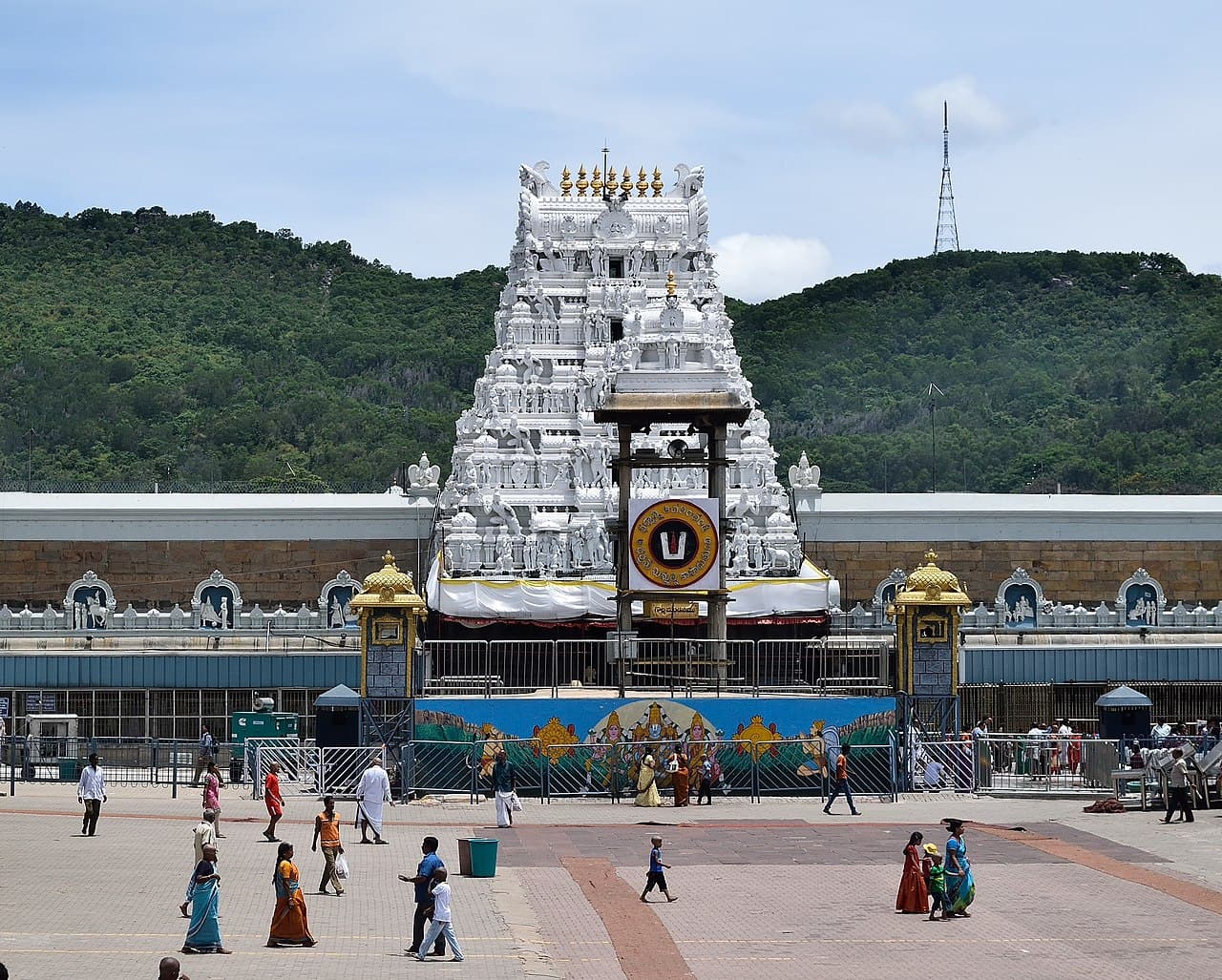
Nikhilb239, CC BY-SA 4.0, via Wikimedia Commons
Tirumala Venkateswara Temple
తిరుమల వేంకటేశ్వర ఆలయం (Tirumala Venkateswara Alayam)
Also known as: Tirupati Balaji Temple, Tirupati Temple, Sri Venkateswara Swamy Temple
Religions: Hinduism | Place Type: Temple | Region: Asia
Overview
The Tirumala Venkateswara Temple is a Hindu temple dedicated to Venkateswara, a form of the god Vishnu, located on the Tirumala Hills at 853 meters elevation in Tirupati, Andhra Pradesh, India. This is one of the world's most-visited religious site, receiving 60,000-80,000 pilgrims daily—and up to 100,000 during festivals—surpassing both Vatican City and Mecca in annual visitor numbers. The temple is also the wealthiest religious institution in the world, with annual donations exceeding USD 400 million.
Present
The Tirumala Venkateswara Temple operates nearly 24 hours daily, with brief closures for deity rituals. The temple opens at 2:30 AM with Suprabhatam (wake-up prayers) and closes around 1:00 AM. Sarva Darshan (general free queue) operates from approximately 8:30 AM to 11:30 PM, taking 3-6 hours on normal days, potentially 20+ hours during festivals. Special Entry Darshan tickets (Rs. 300, approximately USD 3.50) reduce wait to 1-3 hours and must be booked months in advance via ttdevasthanams.ap.gov.in. The temple conducts elaborate daily rituals including Thomala Seva (flower decoration, 4:00-5:00 AM), Archana (prayers throughout the day), and evening Ekanta Seva (the deity's nighttime rest ritual).
The Tirumala Tirupati Devasthanams (TTD) employs thousands of priests, security personnel, sanitation workers, cooks, and administrators. The temple provides Annaprasadam, free meals to all pilgrims, serving up to 100,000 meals daily including breakfast, lunch, and dinner prepared in massive kitchens. Medical services, lost-and-found, and wheelchair assistance are available.
The hilltop location is accessed by two routes: a 10.7 km winding ghat road (21 hairpin bends) navigable by bus or car, and the traditional Alipiri footpath with 3,550 steps (approximately 12 km, taking 3-5 hours to climb). Many pilgrims walk as penance or devotion. The Srivari Mettu and Seshachalam footpaths offer alternative trekking routes through forested hills.
The annual Brahmotsavam festival (September-October) draws millions of pilgrims, with elaborate processions featuring the deity mounted on different vahanams (vehicles)—including Garuda (mythical eagle), horses, elephants, and chariots—parading around the temple.
Religious Significance
Hinduism
The temple is dedicated to Lord Venkateswara, a manifestation of Vishnu, the preserver deity in the Hindu trinity (Brahma the creator, Vishnu the preserver, Shiva the destroyer). According to temple tradition, Venkateswara descended to earth during the present era of Kali Yuga (the current age in Hindu cosmology, characterized by moral decline) to save humanity from its trials and guide devotees toward liberation (moksha, release from the cycle of rebirth).
The temple's origin legend centers on Vishnu's incarnation to resolve divine marital conflict and human salvation. The most popular version recounts that Vishnu descended as Venkateswara on the Venkata Hills and married Padmavathi, an incarnation of the goddess Lakshmi. To finance this celestial wedding, Venkateswara borrowed money from Kubera (the god of wealth), which devotees help him repay through offerings—explaining the immense wealth donated to the temple.
Pilgrims believe that sincere worship of Venkateswara grants wishes, removes obstacles, and provides divine protection. The deity's idol is a 6-foot-tall black stone figure standing in tribhanga posture (triple-bend pose), adorned with gold ornaments and precious gems. The deity's eyes are covered with a cloth because they are considered so powerful that direct sight could overwhelm devotees. Darshan (viewing the deity, a central Hindu religious practice) is the primary goal of pilgrimage. Even a brief glimpse—sometimes lasting only seconds during peak times—is considered profoundly auspicious.
Devotees commonly make vows (sankalpam) promising offerings if prayers are answered: monetary donations, gold jewelry, and tonsure (head-shaving) are most common. Over 25,000 pilgrims per day undergo tonsure at Kalyana Katta, the world's largest barbershop facility, offering their hair as humility before god. The temple sells this hair internationally for wigs and extensions, generating millions in revenue. The temple also produces the famous Tirupati Laddu, a sweet ball-shaped prasadam (blessed food offering) protected by Geographical Indication status—only Tirumala Tirupati Devasthanams can legally make or sell it. Each pilgrim receives two laddus after darshan. The phrase "Govinda Govinda" echoes constantly as pilgrims climb the sacred hills.
History & Structure
Hindu texts have referenced the sanctity of Venkata Hill since antiquity, with historical records dating the temple's existence to the 9th-century Pallava dynasty. The site gained significant patronage under the Chola dynasty and reached its height during the Vijayanagara Empire between the 14th and 17th centuries. Inscriptions on the temple walls continue to document the extensive 16th-century donations of gold and land provided by King Krishnadevaraya.
In response to the high volume of modern practitioners, temple infrastructure expanded significantly throughout the 20th and 21st centuries. All operations have been overseen by the Tirumala Tirupati Devasthanams (TTD) since 1933. This administration manages the Vaikuntam Queue Complexes—a vast system of covered walkways and electronic management designed to facilitate the thousands of pilgrims awaiting darshan.
Practical Information
- Access
- Without booking, only Sarva Darshan (free, long wait) is available.
- Accommodation
- TTD guesthouses and choultries (pilgrim rest houses) available via online booking (Rs. 100-600 per room). Private hotels in Tirupati town (Rs. 1,000-5,000).
- Admission
- Rs. 300 per person, 1-3 hour wait. Book online in advance.
- Best Time
- Avoid weekends, public holidays, and festival periods. Weekday mornings less crowded. Annual Brahmotsavam (September-October) sees maximum crowds—only visit if specifically seeking festival experience.
- Booking
- Book Special Entry Darshan, accommodations, and sevas 3 months in advance via ttdevasthanams.ap.gov.in. Create account, select services, pay online. Without booking, only Sarva Darshan (free, long wait) is available.
- Darshan Duration
- Actual time viewing deity: 5-15 seconds. Move quickly; no stopping allowed.
- Dress Code
- Traditional Indian attire required. Men: dhoti and shirt, or kurta-pyjama. Women: saree or salwar kameez with dupatta covering shoulders. Western clothes (jeans, T-shirts, shorts) strictly prohibited regardless of age. Rental traditional clothing available.
- Duration
- Plan full day minimum. Early morning arrival recommended.
- Facilities
- TTD provides free drinking water and restrooms in queue.
- Getting There
- Fly to Tirupati Airport (15 km from Tirupati town, 30 km from Tirumala; connections from major Indian cities). Tirupati Railway Station is well-connected. From Tirupati town, take TTD buses (Rs. 50-70, frequent departures, 40 minutes) or hire taxis (Rs. 600-800 one-way). Buses depart from Srinivasam Bus Stand.
- Hair Tonsure
- Free at Kalyana Katta if desired. Operating 24/7. Wait times vary. Bring a hat or scarf afterward as the hill is sunny and cool mornings occur.
- Laddu Prasadam
- Two laddus (Rs. 10 each) distributed after darshan. Additional laddus available for purchase: 175g for Rs. 50, 750g for Rs. 200.
- Location
- Tirumala Hills, Tirupati, Chittoor District, Andhra Pradesh, approximately 150 km northwest of Chennai, 250 km from Bangalore.
- Sarva Darshan
- Free general queue. Wait times: 3-6 hours (normal days), 8-12 hours (weekends), 20+ hours (festivals). Queue operates day and night. Bring patience, snacks, water. TTD provides free drinking water and restrooms in queue.
- Security
- Security is extremely tight with metal detectors, bag checks, and surveillance due to the crowds and past incidents.
- Special Entry Darshan
- Rs. 300 per person, 1-3 hour wait. Book online in advance.
- Temple Timings
- Effectively 24/7 with brief closures for rituals (2-4 AM). Darshan available most hours. Check TTD website for specific daily timings as they vary.
- What Not to Bring
- Mobile phones, cameras, electronic devices, bags larger than small purse—strictly prohibited in temple. Free cloakrooms available (long queues to deposit/retrieve).