
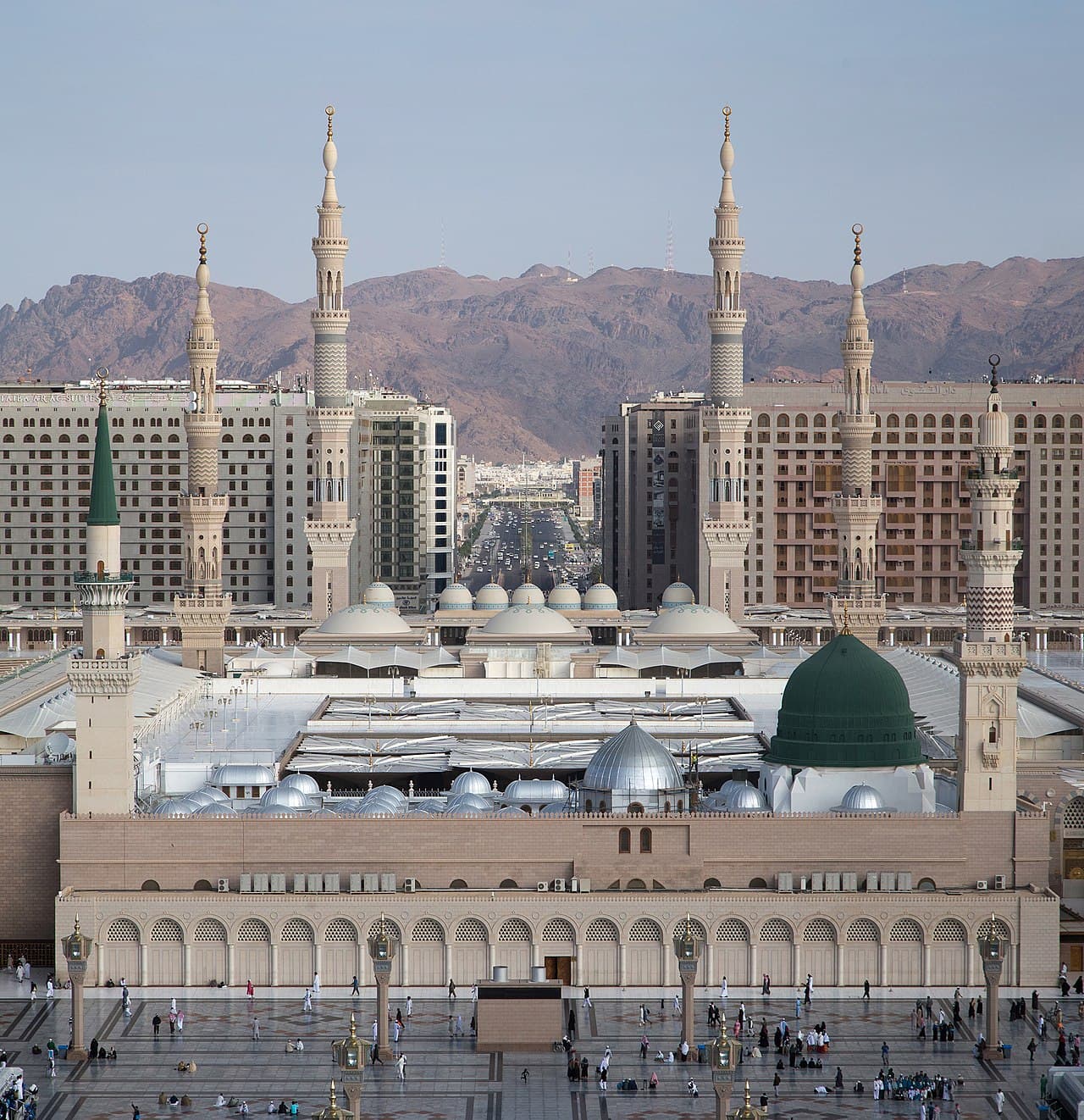
Muhammad Mahdi Karim, GFDL 1.2, via Wikimedia Commons
Prophet's Mosque
Al-Masjid an-Nabawi (المسجد النبوي)
Also known as: Masjid al-Nabawi, Mosque of the Prophet
Religions: Islam | Place Type: Mosque | Region: Middle East
Overview
The Prophet's Mosque, or Al-Masjid an-Nabawi, is a massive mosque located in the city of Medina, Saudi Arabia, built by Prophet Muhammad. It is the second holiest site in Islam. The distinctive Green Dome marks the location of Muhammad's burial chamber. The mosque can accommodate over one million worshippers.
Present
The mosque is administered by the Saudi government through the General Presidency for the Affairs of the Two Holy Mosques. It operates 24 hours a day and is one of the largest mosques in the world.
Non-Muslims are permitted to enter Medina, but not the Prophet's Mosque itself. The area immediately surrounding the mosque (the Haram boundary) is restricted to Muslims.
During Hajj season and Ramadan, the mosque becomes extremely crowded as pilgrims visit before or after completing their pilgrimage in Mecca.
The Rawdah area is particularly crowded as all visitors wish to pray there. Separate times are allocated for men and women to visit this section.
Religious Significance
Islam
Al-Masjid an-Nabawi is the second holiest mosque in Islam, after Masjid al-Haram in Mecca. The Prophet Muhammad built the original mosque in 622 CE after his migration (Hijra) from Mecca to Medina - an event that marks the beginning of the Islamic calendar.
The Prophet's Tomb
Muhammad died in 632 CE and was buried in the room where he died - which was the house of his wife Aisha, adjacent to the mosque. The tombs of Abu Bakr (the first caliph) and Umar (the second caliph) are also located here. Visiting (ziyarah) the Prophet's tomb is a cherished act for Muslims, though it is not part of the Hajj or Umrah rituals.
The Rawdah
Between the Prophet's tomb and his pulpit (minbar) lies an area called the Rawdah (or Riyad al-Jannah), meaning "Garden of Paradise," which is distinguished by green carpeting while the rest of the mosque has red carpet.
History & Structure
The original mosque is said to have been built as a simple open-air structure with a roof of palm leaves supported by palm tree trunks, serving as a community center, court, and religious school as well as a place of worship. The mosque has been expanded numerous times over the centuries to accommodate the growing number of pilgrims.
The Green Dome: The distinctive green dome over the Prophet's tomb was originally built in 1279 CE and has been rebuilt several times. It was painted green in 1837. The dome is one of the most recognizable symbols of Islamic architecture.
Minarets: The mosque has ten minarets, each more than hundred meters tall.
The current mosque covers approximately 400,500 square meters and features retractable roofs and umbrellas that provide shade in the courtyards.
Practical Information
- Access Restriction
- Non-Muslims can visit Medina city but cannot enter the Prophet's Mosque or the surrounding Haram (sacred) area.
- Dress Code
- - Men: Clean, modest clothing - Women: Full covering including face
- For Muslims
- - **Hours:** Open 24 hours daily - **Admission:** Free - **Best Time:** Early morning or late night for smaller crowds. The Rawdah (green carpeted area) has designated visiting times for men and women.
- Getting There
- Medina has an international airport (Prince Mohammad bin Abdulaziz). The mosque is in the city center.
- Location
- Central Medina, Saudi Arabia.
- Tips
- - Medina is generally calmer than Mecca. - Many hotels are within walking distance. - Friday prayers are especially crowded.
- Visiting the Prophet's Tomb
- - Men enter from the east side - Women have separate designated times - Move respectfully past the tomb; do not linger
- Visiting the Rawdah
- - Extremely crowded; patience required - Separate times for men and women - Brief visits expected due to high demand