
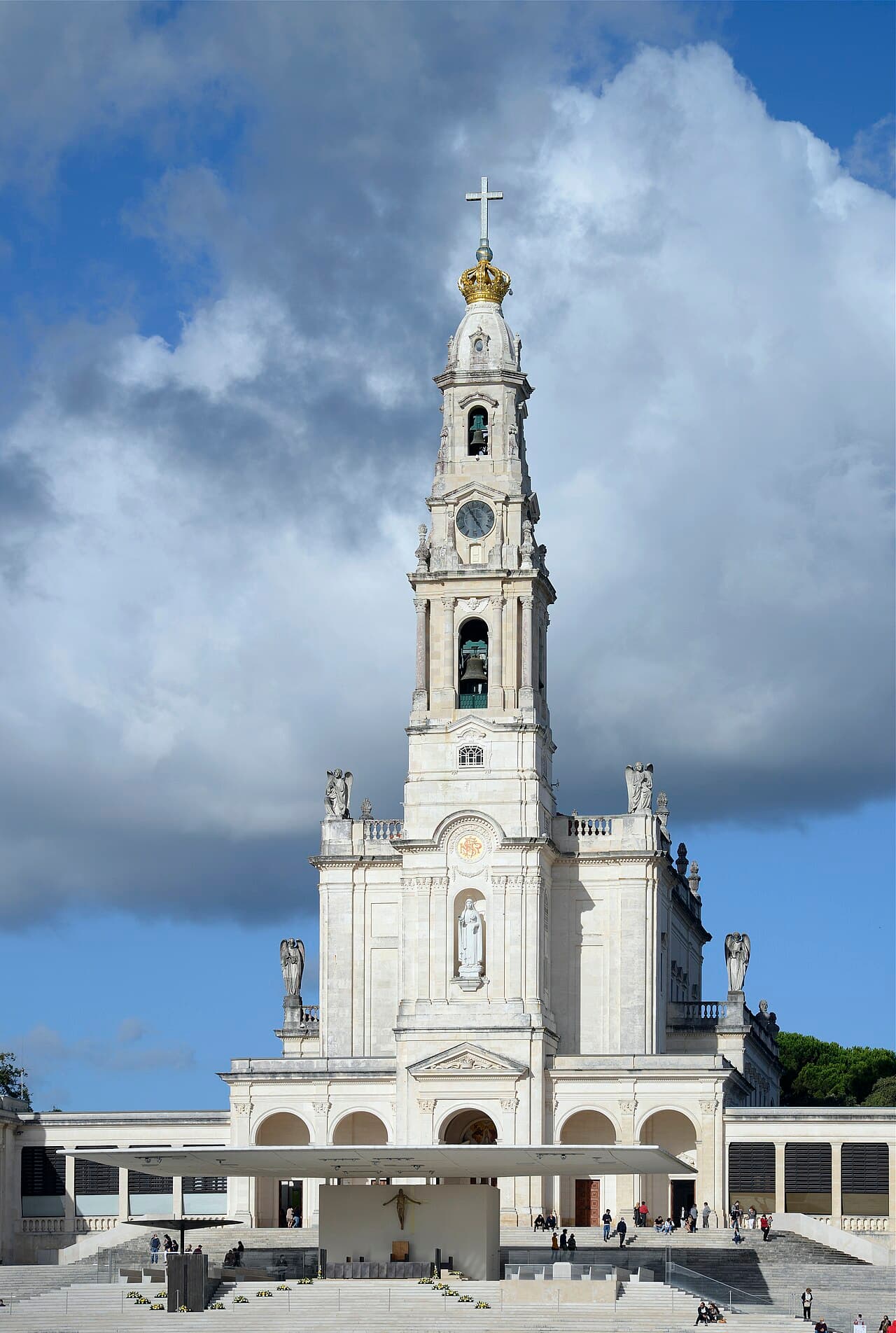
Alvesgaspar, CC BY-SA 4.0, via Wikimedia Commons
Sanctuary of Fátima
Santuário de Fátima
Also known as: Sanctuary of Our Lady of Fátima, Fátima Shrine, Cova da Iria
Religions: Christianity | Place Type: Sanctuary | Region: Europe
Overview
The Sanctuary of Fátima is a Catholic pilgrimage site in Fátima, Portugal, centered on Cova da Iria where three shepherd children reported six apparitions of the Virgin Mary in 1917. The sanctuary complex includes the Chapel of the Apparitions marking the exact spot, two major basilicas, and a vast esplanade. Fátima ranks among the world's most important Catholic Marian shrines, attracting 6-8 million pilgrims annually who come to pray, attend masses, and walk on their knees across the immense plaza as acts of devotion and penance.
Present
The Sanctuary of Fátima operates under the Diocese of Leiria-Fátima, conducting daily masses and religious ceremonies. The sanctuary welcomes 6-8 million visitors annually, with numbers doubling during Holy Years and centenary celebrations (2017 centenary saw 8 million). May 12-13 and October 12-13 pilgrimage periods attract 200,000-500,000 pilgrims for major celebrations including the International Anniversary Pilgrimage with all-night vigils, candlelight processions, and papal messages.
The Chapel of the Apparitions operates continuously for prayer. Pilgrims queue to touch the marble column marking Mary's appearance and leave petitions in baskets. Thousands of votive candles burn in long racks beside the chapel; pilgrims light candles ranging from small tapers to enormous candles taller than a person, creating walls of flame. The wax from burned candles is collected and recycled into new candles.
Daily programs include morning and evening masses in Portuguese (major languages during peak seasons), Stations of the Cross, rosary recitations, and the impressive candlelight procession (21:30 during summer, earlier in winter) where tens of thousands process through the esplanade carrying candles while singing Marian hymns. Confessions are heard in multiple languages via volunteer multilingual priests.
Religious Significance
Roman Catholicism
The sanctuary's significance stems from six Marian apparitions reportedly witnessed by three children—Lúcia Santos (age 10) and her cousins Francisco (9) and Jacinta Marto (7)—on the 13th day of each month from May through October 1917. The children were tending sheep in Cova da Iria when a Lady "brighter than the sun" appeared above a small holm oak tree. She identified herself as "Our Lady of the Rosary" and asked the children to pray the rosary daily for world peace and conversion of sinners (World War I was raging).
The Lady revealed three "Secrets of Fátima." The first two secrets described visions of hell and prophecies about World War II and communism's threat to faith. The third secret, written by Lúcia but kept sealed until 2000, described a "bishop dressed in white" (interpreted as the pope) being killed, understood as symbolizing persecution of the Church in the 20th century. During the final October 13 apparition, approximately 70,000 people gathered, witnessing the "Miracle of the Sun"—the sun appearing to dance, spin, and plunge toward earth in multicolored displays for 10 minutes, visible for miles. Weather reports confirmed the day began rainy but the ground and soaked crowd mysteriously dried instantly during the phenomenon. While skeptics propose natural explanations (sun dogs, mass hysteria), believers consider it miraculous confirmation.
The Lady emphasized penance, conversion, and devotion to Mary's Immaculate Heart. She prophesied that Francisco and Jacinta would soon die (both succumbed to the 1918-20 flu pandemic; Francisco at age 11, Jacinta at 10), while Lúcia would live long to spread the message (she became a Carmelite nun, dying in 2005 at age 97). Pope John Paul II credited Our Lady of Fátima with saving his life during the 1981 assassination attempt (which occurred on May 13, Fátima's anniversary). He placed one of the bullets that struck him in the crown of Our Lady of Fátima's statue. The Church officially approved the apparitions as "worthy of belief" in 1930. Francisco and Jacinta were canonized (declared saints) in 2017.
History & Structure
The first chapel at Cova da Iria, a simple structure over the site of the oak tree, was built in 1919 by local believers. Anti-religious authorities dynamited it in 1922, but it was rebuilt. The small Chapel of the Apparitions still stands at the exact location, enclosing the spot where the Virgin appeared, marked by a marble column with the statue of Our Lady of Fátima. This humble chapel remains the spiritual center where pilgrims pray day and night.
The Basilica of Our Lady of the Rosary (1928-1953) dominates the sanctuary. Its 65-meter-high central tower is topped by a 7,000 kg bronze crown and cross, illuminated at night and visible for kilometers.
The basilica contains the tombs of the three visionaries: Francisco and Jacinta's remains were transferred there in 1952, and Lúcia was interred in 2006. Pilgrims line up to pray at these tombs. The esplanade in front, twice the size of St. Peter's Square in Rome, accommodates hundreds of thousands for major celebrations. Many pilgrims cross the vast plaza on their knees as penance—a journey taking 30+ minutes on the hard white stone. In 2007, the Basilica of the Holy Trinity opened on the esplanade's opposite end. This modern, circular building with minimalist design seats 8,633 people, with standing room for 9,000+. Its diameter (125 meters) and contemporary aesthetic contrast sharply with the traditional Rosary Basilica.
The sanctuary expanded significantly through the 20th-21st centuries, adding pastoral centers, retreat houses, museums, an exhibition center, and infrastructure for mass gatherings. The sanctuary covers approximately 40 hectares. The Via Sacra (Sacred Way) connects the sanctuary to town with 15 chapels depicting mysteries of the rosary.
Practical Information
- Accessibility
- Excellent accessibility. Ramps, elevators, accessible restrooms. Wheelchairs available. Special viewing areas for disabled pilgrims at ceremonies.
- Accommodation
- Fátima has 250+ hotels and guesthouses (€30-100). Pilgrim hostels (€15-30). Book months ahead for May and October anniversary pilgrimages. Sanctuary hospitality houses offer economical accommodation.
- Best times in the day
- April-June or September for pleasant weather and moderate crowds. May 12-13 and October 12-13 for anniversary pilgrimages (very crowded but deeply moving). Avoid July-August (hottest, most crowded). Winter (November-March): quiet, cold, rainy; reduced visitor services but sanctuary fully operational.
- Ceremonies
- Candlelight procession nightly at 21:30 (summer) or earlier (winter)—spectacular with thousands of participants carrying candles across the esplanade while singing Ave Maria.
- Chapel of the Apparitions
- Accessible continuously for prayer.
- Dress Code
- Modest attire required. Shoulders and knees covered in churches. Casual but respectful clothing acceptable on esplanade.
- Duration
- Minimum half-day for chapel, basilicas, and one mass. Full day for comprehensive visit including museums and ceremonies. Many pilgrims spend 2-3 days to participate in multiple ceremonies.
- Getting Around
- Sanctuary and town are walkable.
- Getting There
- No direct train to Fátima. From Lisbon: Bus from Sete Rios or Campo Grande stations (1.5-2 hours, €10-15, hourly). From Porto: Bus (2-2.5 hours, €12-18). Organized pilgrimage tours available from major cities. Nearest airport: Lisbon (130 km). Car: A1 motorway from Lisbon/Porto, exit for Fátima. Parking available near sanctuary (free and paid lots).
- Language
- Portuguese primary language. English, Spanish, Italian, French commonly spoken by staff during pilgrimage season. Multilingual signage.
- Location
- Fátima is in central Portugal, 130 km north of Lisbon, 200 km south of Porto.
- Masses
- Daily masses in Portuguese. Major languages during pilgrimage season. Check sanctuary website for detailed schedule. International Anniversary Pilgrimages (May 12-13, October 12-13): extended schedules with overnight vigils.
- Nearby Sites
- Batalha Monastery (11 km, UNESCO site), Alcobaça Monastery (40 km, UNESCO), Nazaré beach town (50 km), Óbidos medieval village (60 km).
- Safety
- Very safe environment. Watch belongings in crowded areas. Medical services available on sanctuary grounds.
- Sanctuary Hours
- Open 24/7 year-round. Free entry to all areas including basilicas and chapel.