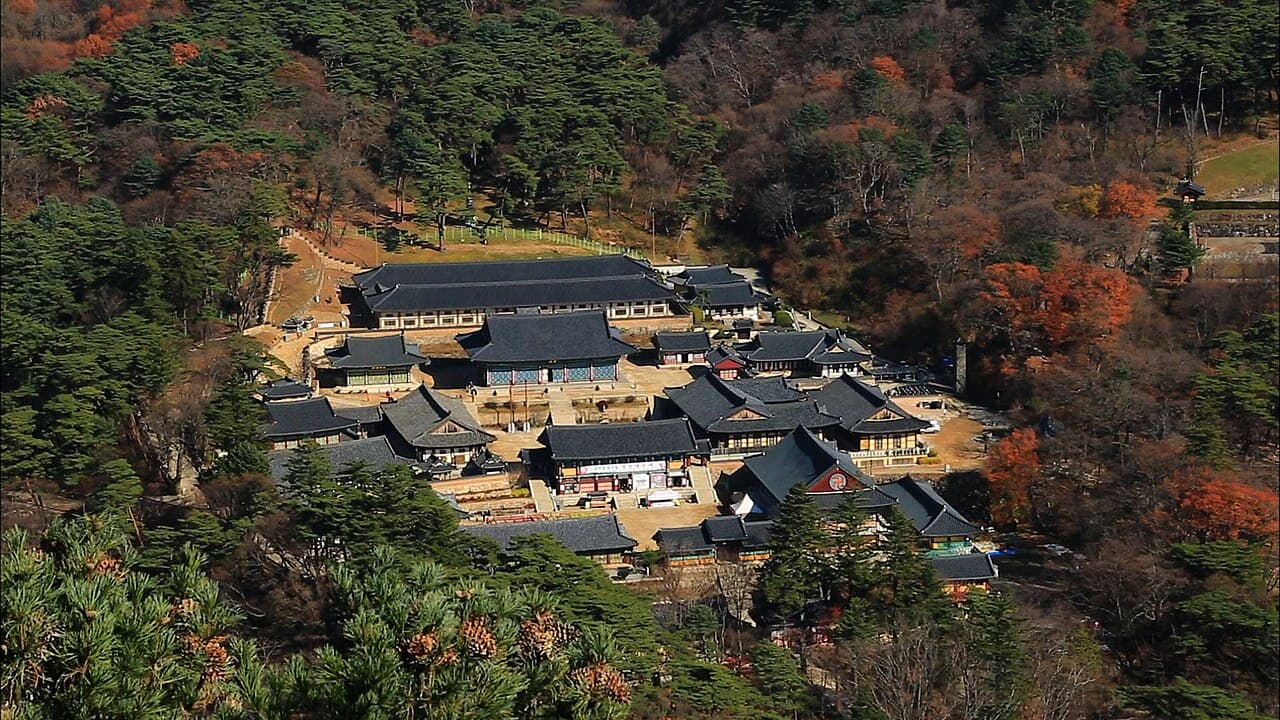
Korea Educational Broadcasting System (EBS), CC BY 4.0, via Wikimedia Commons
Haeinsa Temple
海印寺 (Haeinsa)
Also known as: Haeinsa, Tripitaka Koreana Temple
Religions: Buddhism | Place Type: Temple | Region: Asia | UNESCO World Heritage Site
Overview
Haeinsa Temple is a Buddhist temple located on Mount Gayasan in Hapcheon County, South Gyeongsang Province, South Korea. Founded in 802 CE, it is one of Korea's Three Jewel Temples and houses the Tripitaka Koreana, the most complete collection of Buddhist scriptures in existence. The temple complex, particularly the Janggyeong Panjeon depositories, was designated a UNESCO World Heritage Site in 1995.
Present
Haeinsa remains an active monastery where monks perform daily rituals and maintain the Tripitaka Koreana. These ancient woodblocks are housed in the original Janggyeong Panjeon depositories, which use sophisticated natural ventilation to preserve the collection. While interior access is strictly restricted for conservation, the temple has recently allowed limited public viewing for pre-registered visitors.
The complex, located in the scenic Gayasan National Park, offers "Temple Stay" programs where guests can experience monastic life through meditation and traditional meals. As a major spiritual center, Haeinsa combines its role as a high-tech conservation site with an immersive environment for Buddhist practice.
Religious Significance
Buddhism
Haeinsa is one of the Three Jewel Temples of Korea, representing the Dharma Jewel (Buddhist teachings), while Tongdosa represents the Buddha Jewel and Songgwangsa represents the Sangha Jewel (monastic community). The temple belongs to the Jogye Order of Korean Buddhism, the largest Buddhist sect in Korea. Haeinsa's supreme treasure is the Tripitaka Koreana (also called Palman Daejanggyeong, meaning "Eighty-Thousand Tripitaka"), the most complete and accurate collection of Buddhist canonical texts in existence. The Tripitaka comprises 81,258 wooden printing blocks carved with Buddhist scriptures, laws, and treatises in Classical Chinese characters, totaling over 52 million characters across 1,496 titles and 6,568 volumes. Each woodblock measures 24 cm high by 70 cm long and weighs 3-4 kilograms.
Historical Context of the Tripitaka
An original set of woodblocks was created in 1011 CE but was destroyed during the Mongol invasions in 1232. The current set was carved between 1237-1249 under King Gojong of the Goryeo Dynasty as an appeal to Buddha's power for protection against the Mongol invasions. It has served as the reference source for Buddhist canon compilations in other countries, including Japan's Taishō Tripitaka.
In 2007, the Tripitaka Koreana was inscribed on UNESCO's Memory of the World Register. Pilgrims and scholars visit to pay respects to this invaluable repository of Buddhist wisdom.
History & Structure
Haeinsa was founded in 802 CE during the Silla Kingdom by two monks, Suneung and Ijeong, who sought to create a spiritual center for Buddhist practice. According to legend, the temple's name "Haeinsa" means "Reflection on a Calm Sea," derived from the Avatamsaka Sutra's concept that all phenomena are reflected in the mind like images on a still ocean. The temple flourished during the Goryeo Dynasty (918-1392) and received royal patronage. The Tripitaka Koreana blocks were brought to Haeinsa in 1398 from Ganghwa Island for safekeeping and have remained there for over 600 years.
Janggyeong Panjeon Depositories: The buildings housing the Tripitaka were constructed or renovated in 1488 during the Joseon Dynasty (1392-1897). The depositories comprise four buildings arranged in a rectangle around a courtyard: the larger Beopbojeon (Hall of Dharma) to the north and Sudarajang (Hall of Sutras) to the south, each 60 meters long, plus two smaller buildings on the east and west sides. Traditional conservation methods have preserved the wooden blocks in pristine condition for over 750 years.
Practical Information
- Admission
- Temple grounds: ¥3,000 adults, ¥1,500 teenagers, ¥1,000 children. National Park entry (if arriving by car): separate fee.
- Best Time
- Spring (April-May) for cherry blossoms and azaleas. Autumn (October-November) for fall foliage. Weekdays are less crowded than weekends.
- Dress Code
- Modest clothing covering shoulders and knees. Remove shoes when entering temple buildings. Respectful silence requested in sacred areas.
- Getting There
- From Seoul: Take a bus from Seoul Express Bus Terminal to Haeinsa (4 hours, ¥25,000). From Daegu: Take a bus from Seobu Bus Terminal to Haeinsa (1.5 hours, ¥7,000). From Busan: Take a bus to Haeinsa via Daegu (3 hours total). Local buses also connect from Hapcheon town. After arriving at Haeinsa bus stop, walk 1.6 km) through forest along a stream to reach the temple entrance. Taxis available for those with mobility challenges.
- Hours
- Generally 08:30-18:00 (summer), 08:30-17:00 (winter). Hours may vary; confirm before visiting. Temple grounds are accessible, but Janggyeong Panjeon depositories have restricted viewing windows.
- Location
- Haeinsa is located in Gayasan National Park, Hapcheon County, South Gyeongsang Province.
- Photography
- Exterior photography permitted. Photography of the Tripitaka woodblocks strictly prohibited. No flash photography inside buildings.
- Temple Stay
- Available year-round by advance reservation. Programs include meditation, Buddhist services, monastic meals, temple etiquette, and conversations with monks. Basic Korean language knowledge helpful but not required. English-language programs occasionally available. Book through official Temple Stay website (http://eng.templestay.com) at least one week in advance.