
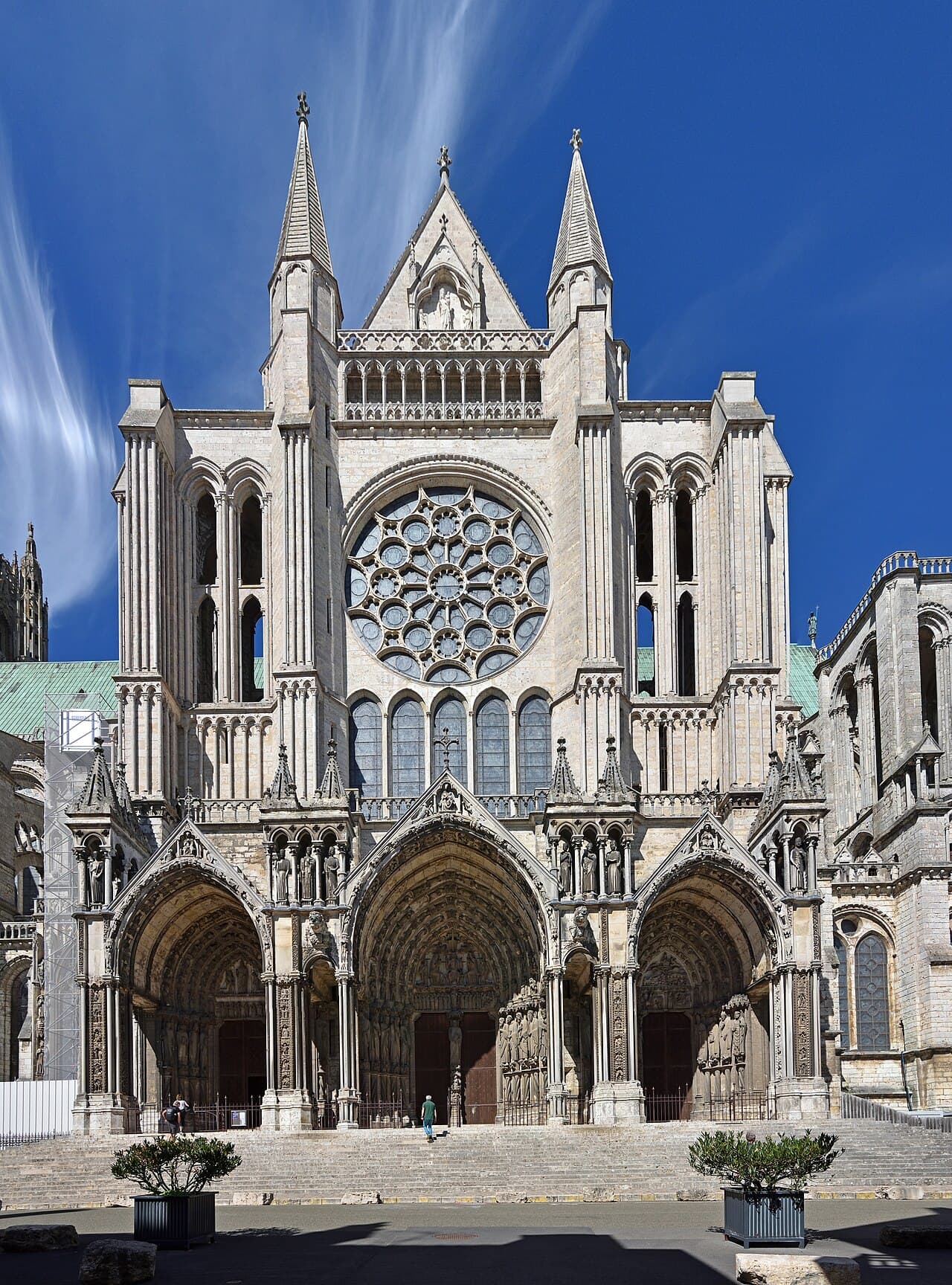
Ludvig14, CC BY-SA 4.0, via Wikimedia Commons
Chartres Cathedral
Cathédrale Notre-Dame de Chartres
Also known as: Notre-Dame de Chartres, Cathedral of Our Lady of Chartres
Religions: Christianity | Place Type: Cathedral | Region: Europe | UNESCO World Heritage Site
Overview
Chartres Cathedral, located approximately 90 kilometers southwest of Paris, serves as one of France’s most significant centers of Marian devotion. For centuries, the site has drawn pilgrims specifically to venerate the Sancta Camisia—the tunic believed to have been worn by the Virgin Mary. This sacred atmosphere is deepened by the 12th-century labyrinth inlaid in the floor, which continues to serve as a path for meditative prayer and spiritual reflection. While recognized as a UNESCO World Heritage site for its historical importance, the cathedral remains an active place of pilgrimage, defined by its enduring role in the spiritual life of the faithful.
Present
Chartres Cathedral functions as the seat of the Bishop of Chartres and an active Catholic parish conducting daily masses, baptisms, weddings, and funerals. The cathedral welcomed 1.5 million visitors in 2024, combining pilgrims and cultural tourists.
Modern restoration controversies erupted in 2009 when authorities began cleaning and repainting interior stonework, revealing original cream and ochre colors. Critics argue the light colors reduce the cathedral's medieval atmosphere; supporters note accuracy to original 13th-century appearance. The ongoing debate highlights tensions between historical authenticity and romantic expectations.
The cathedral treasury displays the Sancta Camisa relic, liturgical objects, and medieval manuscripts. The crypt, one of France's largest, reveals remains of earlier churches and a 9th-century well.
Religious Significance
Roman Catholicism
Chartres Cathedral, dedicated to the Virgin Mary (Notre-Dame, "Our Lady"), has been a major Marian pilgrimage site since medieval times. The cathedral's most precious relic is the Sancta Camisa (Holy Tunic), believed to be the garment worn by the Virgin Mary when she gave birth to Jesus. According to tradition, Byzantine Empress Irene gave the relic to Charlemagne, who donated it to Chartres Cathedral in 876 CE. The relic's survival of the 1194 fire was interpreted as a miracle and sign of Mary's favor, spurring rapid reconstruction. The Sancta Camisa is displayed in the treasury and exposed for public veneration on special occasions. Chartres attracted hundreds of thousands of medieval pilgrims annually, making it one of Europe's most important Marian shrines. Four major pilgrimage routes converged at Chartres.
Today, pilgrimages continue, including an annual student pilgrimage from Paris (Pèlerinage de Chrétienté) that attracts 10,000-15,000 participants who walk 100 km over three days at Pentecost. The cathedral's labyrinth, laid into the nave floor around 1200, measures 12.89 meters in diameter with a path extending 261.5 meters from entrance to center. Medieval pilgrims walked the labyrinth on their knees in prayer as a symbolic journey to Jerusalem or spiritual transformation. The labyrinth is uncovered for walking (chairs normally cover it) on Fridays from March through October. Walking the labyrinth takes approximately 20-40 minutes.
Chartres' stained glass windows (2,600 square meters total), dating mostly from the 12th-13th centuries, function as "Bible for the illiterate," depicting Biblical narratives, saints' lives, and theological concepts in brilliant color.
History & Structure
After a fire destroyed much of Chartres in 1194, the survival of the Sancta Camisia relic was interpreted as divine intervention, inspiring the townspeople to rebuild on a grander scale. This new cathedral was substantially completed by 1220, achieving a rare sense of structural unity because it was built over a relatively short 26-year period.
The site is known for its extensive sculptural program, featuring over 10,000 figures across nine entrance portals. The Royal Portal on the western facade, which survived the 1194 fire, remains one of the most significant examples of early sacred sculpture, depicting Old Testament figures and Christ in Majesty. The cathedral's exterior is further defined by its two asymmetrical towers: a 103-meter spire completed in 1155 and a taller 115-meter spire rebuilt in the early 16th century following a fire.
UNESCO designated Chartres Cathedral a World Heritage Site in 1979.
Practical Information
- Accessibility
- Ground level wheelchair accessible. Upper levels and towers inaccessible (stairs only).
- Accommodation
- Chartres has hotels (€60-120), guesthouses. Many visit as day trip from Paris.
- Admission
- Cathedral entry FREE. Treasury: €7 adults, free under 26. Crypt tours: €4 adults (guided tours only, in French; check tourist office for English tour availability). North Tower climb (€7, seasonal access, check locally).
- Best times in the day
- Spring-autumn for best light through stained glass. Early morning for quieter visit. Avoid Friday mornings if hoping to walk uncovered labyrinth (crowded with pilgrim groups).
- Dress Code
- Modest clothing requested (shoulders and knees covered). Respectful behavior required as active church.
- Duration
- Allow 1-2 hours for cathedral, 30 minutes for treasury, 30 minutes for crypt tour, 30-45 minutes for labyrinth walking. Full visit: 2-3 hours.
- Events
- "Chartres en Lumières" (Chartres in Light), a nightly projection mapping show (April-January, approximately 21:30-01:00, varies by season), illuminates the cathedral facade with colorful light displays depicting the stained glass windows and architectural details. The free show draws large crowds. The cathedral hosts classical music concerts featuring the 1970s organ (63 stops, 4 keyboards).
- Getting Around
- Most visitors explore the compact Old Town on foot.
- Getting There
- From Paris Montparnasse train station, SNCF trains to Chartres (50-70 minutes, €17-33). Trains run hourly. Chartres station is 10-minute walk to cathedral. By car, take A11 motorway from Paris (1.5 hours). Cathedral visible from kilometers away due to prominence.
- Hours
- Cathedral open daily 08:30-19:30 all year. Extended hours until 22:00 Tuesdays, Fridays, and Sundays June-August for "Soirées Autrement" events with organ concerts.
- Labyrinth
- Uncovered Fridays 10:30-17:00 (March 7-October 31, 2025), except during religious celebrations and Good Friday. Free to walk.
- Location
- Chartres Cathedral is in Chartres city center, 90 km southwest of Paris, France. Address: 16 Cloître Notre Dame, 28000 Chartres.
- Photography
- Permitted for personal use without flash or tripod. No photography during services.