
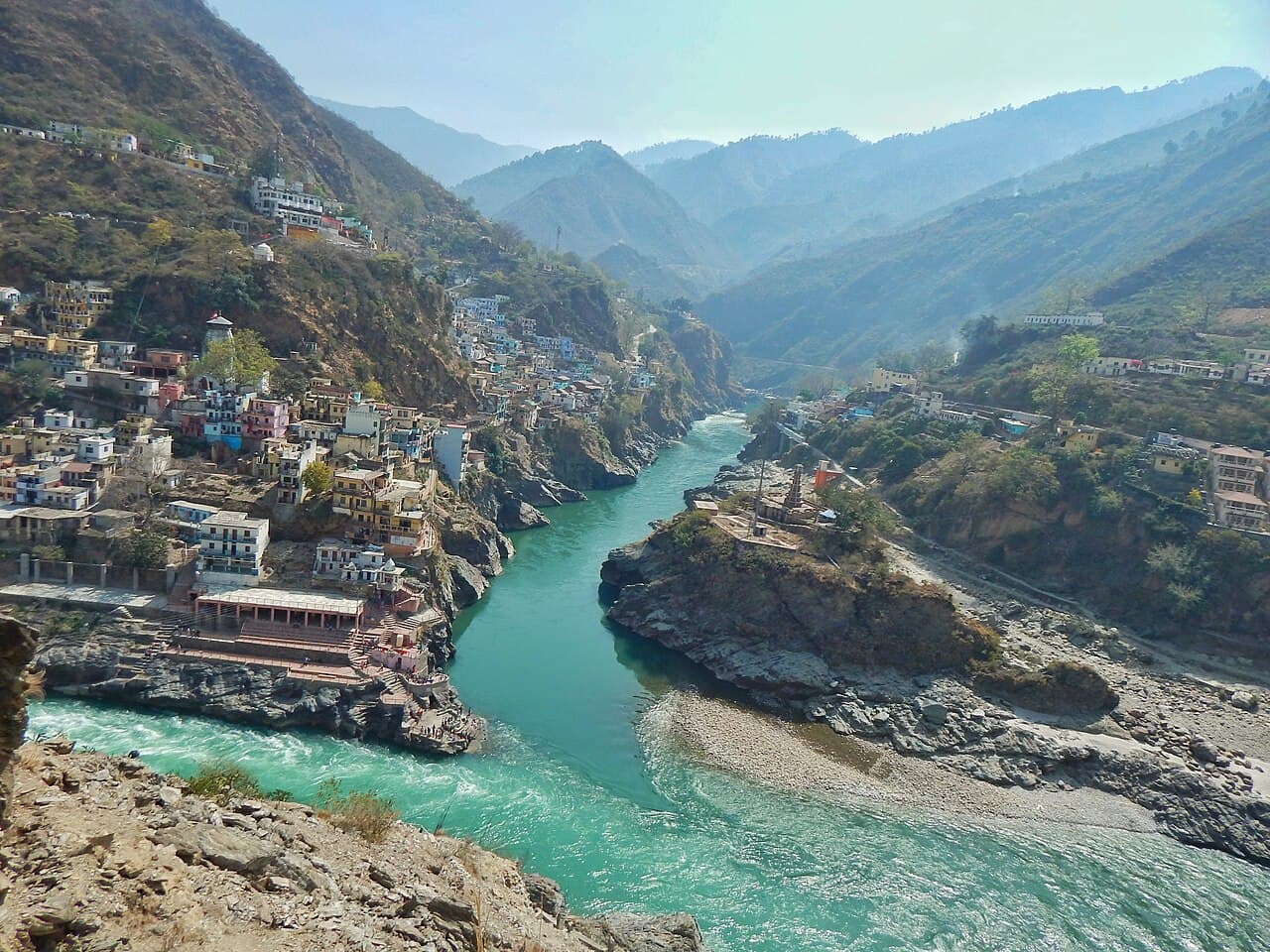
Aniket Singh, CC BY-SA 4.0, via Wikimedia Commons
River Ganges (Ganga)
Gaṅgā / गङ्गा
Also known as: Mother Ganga, Ganga Ma, Bhagirathi
Religions: Hinduism, Buddhism | Place Type: River | Region: Asia
Overview
The Ganges is a 2,525-kilometer (1,569-mile) river flowing from the Himalayas through northern India and Bangladesh to the Bay of Bengal. Revered as the holiest river in Hinduism, the Ganges is personified as the goddess Ganga and is believed to purify sins and grant liberation. Major sacred pilgrimage sites line its banks, with Gangotri, Haridwar, Varanasi, and Prayagraj (Allahabad) being the most significant.
Present
The Ganges remains central to Hindu religious life with millions of pilgrims visiting sacred sites along its course annually. Daily rituals include morning bathing, evening aarti (lamp offerings), and cremations at major ghats. The river supports 400 million people in its basin, providing water for agriculture, industry, and daily life.
Major religious events continue throughout the year. The Ganga Aarti at Haridwar and Varanasi draws thousands daily. The Kumbh Mela rotates between Haridwar, Prayagraj, Nashik, and Ujjain every three years, with the Maha Kumbh Mela at Prayagraj every twelve years attracting tens of millions.
Environmental challenges include severe pollution from industrial waste, sewage, and agricultural runoff. Despite government initiatives like the Ganga Action Plan, water quality remains a critical issue. Conservation efforts continue through government programs and civil society organizations.
Religious Significance
Hinduism
The Ganges is the most sacred river in Hinduism, worshipped as the goddess Ganga who descended from heaven to earth. According to legend, King Bhagiratha performed severe penance to bring Ganga to earth to purify the ashes of his ancestors. Lord Shiva caught the mighty river in his matted locks to soften its descent, preventing destruction of the earth. Bathing in the Ganges is believed to wash away sins and facilitate moksha (liberation from the cycle of rebirth). Hindus carry water from the Ganges for use in rituals and ceremonies. Cremating the dead and immersing ashes in the Ganges is considered the most auspicious final rite, believed to help the deceased attain salvation. The river is invoked whenever water is used in Hindu rituals, making it symbolically present in all sacred waters. Major pilgrimage sites (tirthas) along the river include Gangotri (source), Haridwar (where it enters the plains), Varanasi (holiest city), Prayagraj (Triveni Sangam, confluence of three rivers), and Ganga Sagar (where it meets the sea). The Kumbh Mela, the world's largest religious gathering, occurs every twelve years at four locations along the Ganges and Yamuna rivers.
History & Structure
Source: The Ganges originates at Gaumukh, the terminus of the Gangotri Glacier in the Himalayas at about 4,000 meters altitude in Uttarakhand state. The main headstreams are the Bhagirathi and Alaknanda rivers, which unite at Devaprayag to form the Ganga.
Course: From the Himalayas, the river flows southwestward through Rishikesh and Haridwar onto the Indo-Gangetic Plain. It receives major tributaries including the Yamuna at Prayagraj and continues eastward through Uttar Pradesh and Bihar. In West Bengal, it splits into distributaries before entering Bangladesh, where it is called the Padma, eventually forming the Ganges Delta, the world's largest river delta.
Sacred Geography: Haridwar, where the Ganges enters the plains, has been a pilgrimage site since ancient times. Varanasi, mentioned in texts from 1200 BCE, is the holiest city on the river's banks. Prayagraj hosts the Triveni Sangam, the confluence of the Ganges, Yamuna, and mythical Saraswati rivers, site of the Kumbh Mela.
Historical Significance: The Ganges basin has supported civilizations for millennia, mentioned in the Rigveda (1500 BCE) as one of India's sacred rivers. Great empires including the Mauryas and Guptas flourished in the Gangetic plain.
Practical Information
Gangotri (Uttarakhand): Source of the river, accessible May-November. Temple dedicated to Goddess Ganga. Gaumukh glacier is a 19 km trek from Gangotri.
Haridwar (Uttarakhand): Gateway to the Himalayas where the Ganges enters the plains. Famous for Har Ki Pauri ghat where evening Ganga Aarti occurs daily at sunset. Major Kumbh Mela site.
Varanasi (Uttar Pradesh): Holiest city with 80+ ghats. Dashashwamedh Ghat hosts spectacular evening aarti. Open 24 hours.
Prayagraj/Allahabad (Uttar Pradesh): Triveni Sangam (confluence). Major Kumbh Mela site. Bathing ghats accessible year-round.
Ganga Sagar (West Bengal): Where the Ganges meets the Bay of Bengal. Major pilgrimage during Makar Sankranti (mid-January).
- Access
- Major sites are well-connected by rail and road. Nearest airports: Jolly Grant (Haridwar), Varanasi, Prayagraj.
- Best Time
- October-March for most sites. Gangotri accessible only May-November due to snow.
- Festivals
- Ganga Dussehra (May-June), Kartik Purnima (November), Makar Sankranti (January).
- Major Pilgrimage Sites