
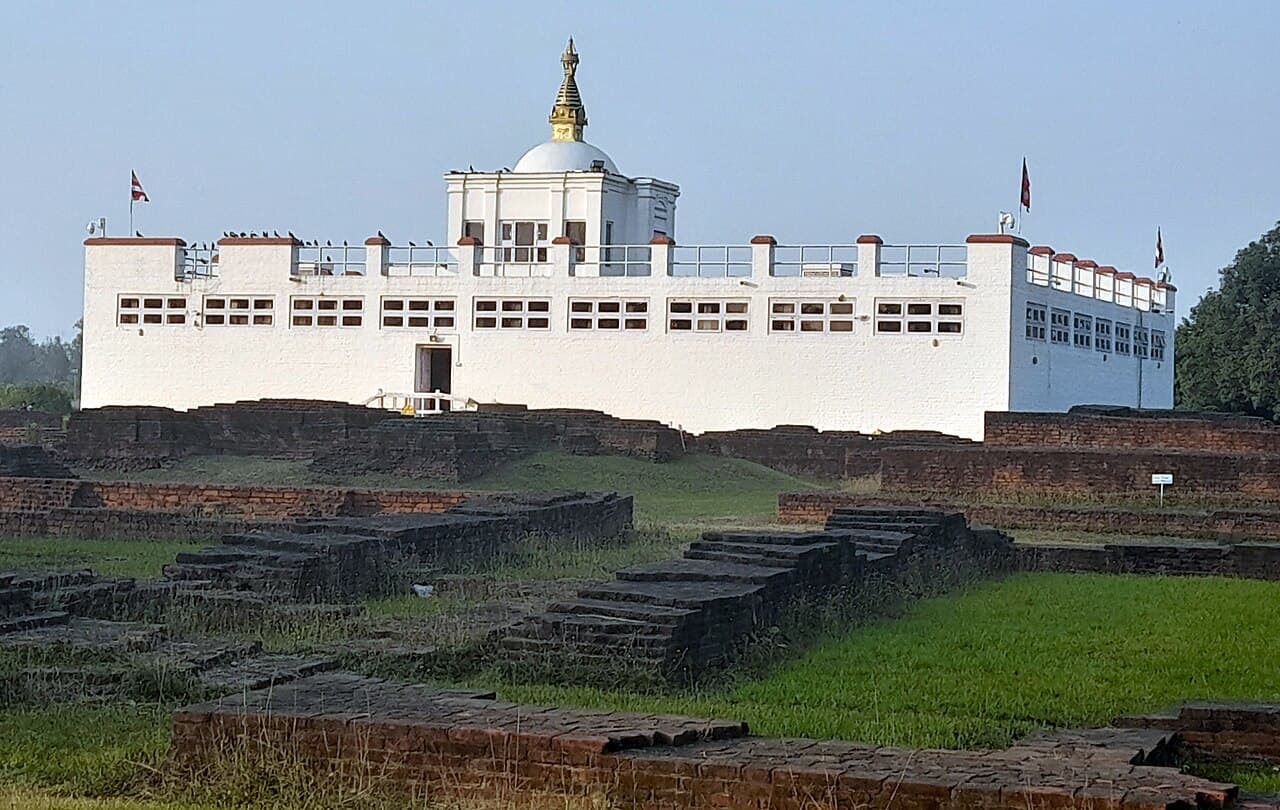
Rangan Datta Wiki, CC BY-SA 4.0, via Wikimedia Commons
Lumbini
Lumbinī / लुम्बिनी
Also known as: Rummindei, Paderia
Religions: Buddhism | Place Type: Pilgrimage site | Region: Asia | UNESCO World Heritage Site
Overview
Lumbini, located in southern Nepal, is the sacred birthplace of Siddhartha Gautama (the Buddha), a UNESCO World Heritage site, and a major Buddhist pilgrimage destination, famous for the Maya Devi Temple marking the exact spot of his birth, the ancient Ashoka Pillar, and monasteries from various nations. UNESCO designated Lumbini a World Heritage Site in 1997 as one of the four most sacred pilgrimage sites in Buddhism.
Present
Lumbini is managed by the Lumbini Development Trust, established by the Government of Nepal. The Sacred Garden contains the Maya Devi Temple, Ashoka Pillar, and ancient archaeological remains. The temple underwent renovation in 2002, and continuous conservation work is supported by UNESCO.
The Monastic Zone features temples and monasteries built by Buddhist countries from around the world, each reflecting their unique architectural and spiritual traditions. The zone is divided into two sections: the East Monastic Zone (Theravada tradition) and the West Monastic Zone (Mahayana and Vajrayana traditions).
The site attracts hundreds of thousands of pilgrims and visitors annually, particularly during Buddha Jayanti (Buddha's birthday) in April-May. The Lumbini International Research Institute conducts Buddhist studies and hosts conferences. A meditation park provides space for contemplative practice.
Recent developments include improved infrastructure and facilities while maintaining the sacred character of the site. The International Buddhist Conference Hall opened in 2022.
Religious Significance
Buddhism
Lumbini is one of the four holiest sites in Buddhism, marking the birthplace of Gautama Buddha. According to Buddhist tradition, Queen Maya Devi was traveling to her father's kingdom when she stopped in Lumbini Garden and gave birth to Prince Siddhartha while holding onto the branch of a sal tree. Immediately after birth, the infant prince took seven steps and declared this would be his final rebirth, signaling his destiny to become the Buddha (the Enlightened One).
The sacred sites include the Maya Devi Temple, which houses a stone relief depicting the birth scene and marks the exact birthplace location. The Puskarini pond (also called the Nativity Pond) is where Maya Devi is said to have bathed before giving birth and where the newborn prince received his first bath.
For Buddhists, pilgrimage to Lumbini is considered essential. Before his death, Buddha himself identified Lumbini as one of four places his followers should visit and "look upon with feelings of reverence," along with Bodh Gaya (enlightenment), Sarnath (first sermon), and Kushinagar (death).
The site attracts pilgrims from all Buddhist traditions worldwide who come to meditate, make offerings, and connect with the origins of their faith.
History & Structure
Ancient Origins: Archaeological excavations revealed evidence of structures dating to the 6th century BCE, confirming the site's ancient sanctity.
Maya Devi Temple: The heart of Lumbini, housing a stone relief which depicts the birth scene and marks the exact birthplace location.
Ashoka Pillar: Erected by Emperor Ashoka in the 3rd century BCE confirming the birthplace of Buddha. The inscription, discovered in 1896, states: "King Devanampriya Priyadarsin came himself and worshipped this spot because the Buddha was born here." The pillar helped modern archaeologists definitively identify Lumbini as Buddha's birthplace.
Buddhist Monasteries: Dating from the 3rd century BCE to the 15th century CE, marking Lumbini's importance as a pilgrimage center throughout Buddhist history.
Rediscovery: The site was lost to history for centuries until archaeologist Dr. Alois Anton Führer and Governor General Khadga Shumsher Rana rediscovered it in 1896 based on accounts from the 7th-century Chinese pilgrim Xuanzang.
Master Plan: In 1978, Japanese architect Kenzo Tange designed the Lumbini Master Plan, creating the current layout with the Sacred Garden, Monastic Zone, and development areas.
Practical Information
- Accommodation
- Hotels and guesthouses in Lumbini town. Some monasteries offer basic accommodation for pilgrims.
- Admission
- Entrance fee for foreigners (approximately NPR 200 for SAARC nationals, NPR 500 for others). Free for Nepali citizens. Additional fees may apply for museum.
- Best Time to Visit
- October to March offers mild temperatures. April-May is significant for Buddha Jayanti celebrations but can be very hot. Monsoon season (June-September) sees heavy rainfall.
- Dress Code
- Modest clothing required. Remove shoes when entering temple areas. Head covering not mandatory but respectful.
- Getting There
- Nearest airport is Bhairahawa (Gautam Buddha Airport, 22 km). Connected by road to Kathmandu (8-9 hours) and Indian border towns. Buses and taxis available.
- Hours
- The Sacred Garden and Maya Devi Temple are open daily from sunrise to sunset (approximately 6:00 AM to 6:00 PM). Some monastery temples have varying hours.
- Location
- Lumbini is in Rupandehi District of Lumbini Province in southern Nepal, approximately 300 km southwest of Kathmandu and 25 km from the Indian border.
- Photography
- Generally allowed in the complex. Be respectful near meditation areas and inside temples.
- Sacred Garden
- Contains the Maya Devi Temple, Ashoka Pillar, Puskarini pond, and archaeological remains. Walking and cycling are the main ways to explore the expansive site.