
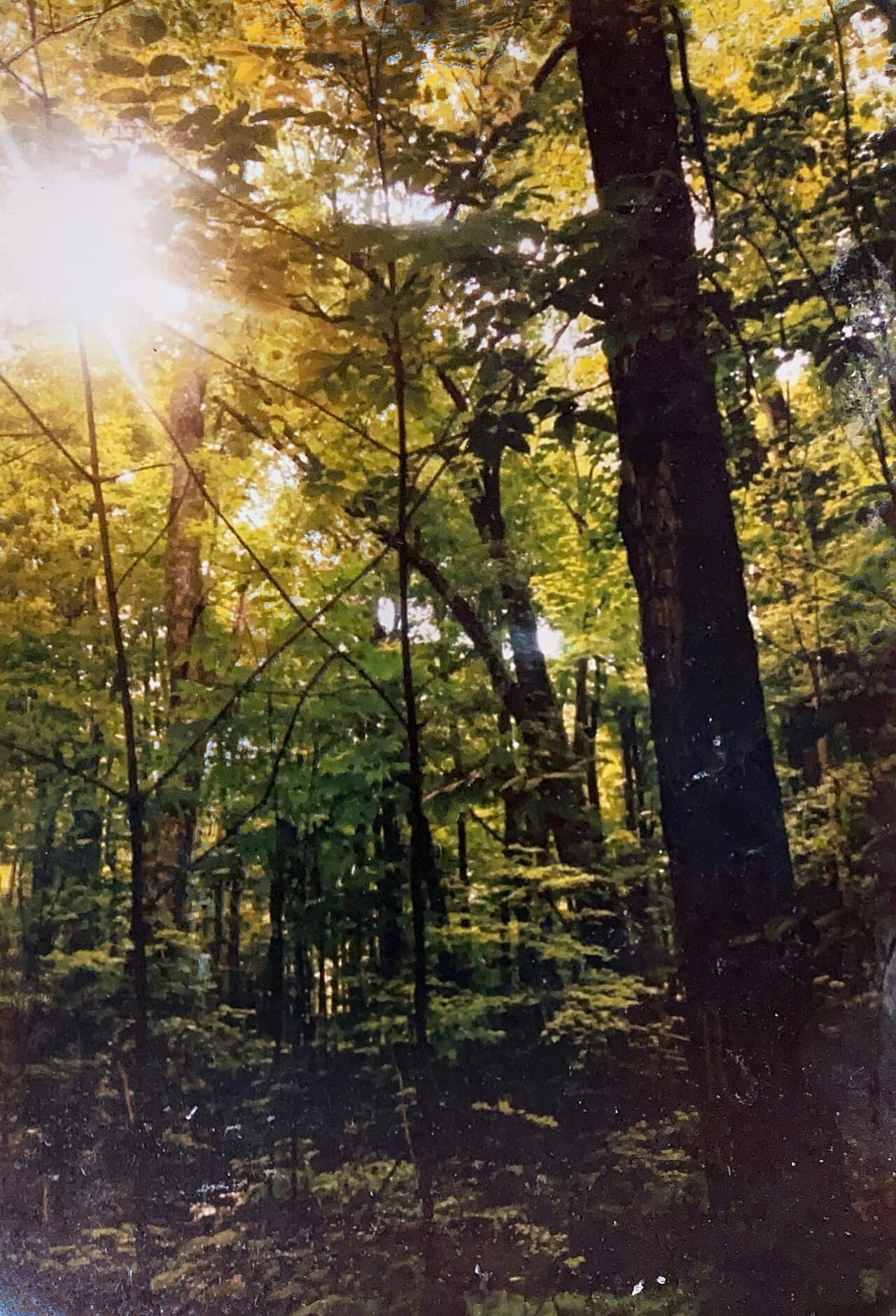
Ashleywood3, CC BY-SA 4.0, via Wikimedia Commons
The Sacred Grove
Sacred Grove
Also known as: First Vision Grove, Joseph Smith Sacred Grove
Religions: Latter-day Saints | Place Type: Sacred forest | Region: North America
Overview
The Sacred Grove is a woodland area in Palmyra, New York, where Joseph Smith, founder of the Latter-day Saints movement, reported experiencing the First Vision in the spring of 1820. In this 10-12 acre old-growth forest on the Smith family farm, the 14-year-old Joseph Smith said that God the Father and Jesus Christ appeared to him in answer to his prayer about which church to join. This event marks the beginning of the Restoration movement and the eventual founding of The Church of Jesus Christ of Latter-day Saints. The grove, preserved since 1907, contains trees dating back to 1820, known as "witness trees," and welcomes visitors year-round as part of the LDS Church's historic sites.
Present
The Sacred Grove is preserved and maintained by The Church of Jesus Christ of Latter-day Saints as part of the Joseph Smith Family Farm historic site. The grove attracts approximately 250,000-300,000 visitors annually. It is open to the public year-round and maintained in a natural woodland state. Unpaved walking paths lead through the grove, with benches placed for quiet rest, reflection, or prayer. Visitors are asked to maintain a respectful silence, as many come for personal contemplation or religious devotion.
Entry begins at the Joseph Smith Farm Welcome Center, where free guided tours are offered by volunteer sister missionaries in multiple languages. Tours typically include the restored Smith family homes and the Sacred Grove and last about 30–45 minutes, though visitors may also explore the grove independently. The Welcome Center provides historical displays, religious artwork, and interpretive materials related to the First Vision and early Latter-day Saint history.
Admission is free, and the site operates with seasonal hours, with extended access during spring and summer. The grove is especially popular in spring and autumn, though it remains open throughout the year. It forms part of a wider network of nearby Latter-day Saint historic sites, and many visitors combine multiple locations in a single visit. The Sacred Grove remains both a preserved historic landscape and an active place of spiritual reflection, welcoming visitors of all backgrounds.
Religious Significance
The Church of Jesus Christ of Latter-day Saints (Mormonism)
For members of The Church of Jesus Christ of Latter-day Saints, the Sacred Grove is the site of the First Vision, the foundational event of their faith. According to Joseph Smith’s accounts, the vision occurred in the spring of 1820, when Smith was 14 years old and living with his family in western New York during a period of intense religious revival known as the Second Great Awakening. Troubled by competing Christian denominations and seeking guidance, Smith went into a wooded area on his family’s farm to pray.
In his later accounts, Smith described experiencing a divine manifestation in which God the Father and Jesus Christ appeared to him, instructed him not to join any existing church, and told him that the original Christian church would be restored at a future time. This vision established several core LDS theological principles: God the Father and Jesus Christ are separate, distinct beings with physical bodies (challenging traditional Christian Trinitarian theology); God speaks directly to humans through living prophets (continuing revelation); the original church established by Christ had fallen into apostasy and needed restoration; and Joseph Smith was chosen as the prophet to restore Christ's true church.
Smith later reported additional revelations that led to the publication of the Book of Mormon and the formal founding of the Church of Christ (later renamed The Church of Jesus Christ of Latter-day Saints) on April 6, 1830. Although Smith recorded multiple versions of the First Vision over time, the core elements remain consistent and form the theological foundation of the Latter-day Saint movement.
For Latter-day Saints, the First Vision is the pivotal event distinguishing their faith from other Christian traditions. It established the fundamental belief that God and Jesus Christ appeared personally to Joseph Smith, validating his calling as a prophet and the restoration of Christ's church. The Sacred Grove thus represents the physical location where divine revelation initiated the Restoration, making it a site of pilgrimage, prayer, and spiritual reflection for millions of LDS members worldwide. Visitors often walk the quiet paths seeking spiritual experiences or contemplating their own faith journeys. The grove is maintained in a natural state with walking trails allowing visitors to experience the peaceful woodland setting where this vision reportedly occurred.
History & Structure
The Smith family purchased the farm in 1818 and cleared portions for agriculture, leaving wooded areas for timber and fuel. The area now known as the Sacred Grove was part of this working woodland, not a designated religious site, at the time Joseph Smith prayed there in 1820. The First Vision was not widely publicized in the church’s early years and gained prominence gradually, becoming central to Latter-day Saint identity in the late 19th century.
After the Smith family left the property in 1830, the farm changed owners. In 1860 it was acquired by Seth T. Chapman, a childhood acquaintance of Joseph Smith, who preserved the western woodlot after being told it was the location of the vision. This decision contributed to the grove’s survival. The Church of Jesus Christ of Latter-day Saints purchased the property in 1907 and developed it as a historic site, formally recognizing the grove’s significance.
Today, the Sacred Grove encompasses approximately 10–12 acres of preserved woodland. Tree-ring studies indicate that some trees date to the early 19th century, potentially standing at the time of the reported vision. The site is maintained in a natural state with walking paths, visitor facilities, and guided tours. It is one of the church’s most significant historic locations and forms part of a National Historic Landmark district designated in 2005.
Practical Information
- Access
- Open to all visitors regardless of faith. Self-guided access allowed during open hours.
- Accessibility
- Welcome Center fully accessible. Grove trails are natural woodland paths with uneven ground, roots, and gentle slopes; not fully wheelchair accessible.
- Accommodation
- Limited lodging in Palmyra. More options in Macedon, Fairport, Victor, or Rochester. Book early in summer and during Hill Cumorah Pageant season.
- Admission
- Free. No donations solicited.
- Best times in the day
- Early morning or late afternoon for quiet, soft light, and fewer visitors.
- Best Times of the year
- - Spring (April–May): symbolic timing, wildflowers - Fall (September–October): foliage and mild weather - Winter: quiet and stark, but cold and snowy
- Dress Code
- No formal code. Modest, respectful clothing recommended. Comfortable walking shoes essential. Plan for outdoor walking on natural terrain.
- Etiquette
- Quiet, reverent behavior encouraged, especially within the grove. Silence or very low voices. Many visitors pray or meditate. No drones. No disruptive behavior. Follow posted guidance on trails and buildings.
- Getting Around
- Best explored on foot. Trails are short and well-marked.
- Getting There
- - By car: From I-90, Exit 43 (Manchester), then Route 21 south, Armington Road, Stafford Road - From Rochester: Route 31 east (30 miles) Rental car recommended; public transit limited.
- Guided Tours
- Free, led by sister missionaries throughout the day. Duration 30–45 minutes. Available in multiple languages. Participation optional.
- Hours
- Seasonal and variable. - November–March: Mon–Sat 09:00–17:00; Sun 13:00–17:00 - April–May: Mon–Sat 09:00–20:00; Sun 12:00–18:00 - June–August: Mon–Sat 09:00–18:00; Sun 11:00–19:00 - September–October: Mon–Sat 09:00–18:00; Sun 13:00–18:00 Occasionally closed for severe weather. Verify before visiting.
- Key Sites
- - The Sacred Grove (old-growth forest and walking paths) - Smith Family Log Home (replica on original foundation) - Smith Family Frame Home (restored) - Joseph Smith Farm Welcome Center
- Location
- Part of the Joseph Smith Farm at 843 Stafford Road, Palmyra, New York 14522, in western New York’s Finger Lakes region, on the border of Palmyra and Manchester.
- Meditation
- Strongly encouraged. Benches and quiet forest spaces support reflection and prayer.
- Photography
- Permitted and encouraged. Natural light preferred; be discreet and quiet.
- Restrictions
- No drones.
- Security
- Minimal, unobtrusive presence. Rural setting; site staff available. Standard personal awareness sufficient.
- Tickets
- None required.
- Tips
- The Sacred Grove is designed for stillness rather than sightseeing speed. Even non-religious visitors often find the old-growth forest calming and meaningful. Take time to slow down, walk deliberately, and experience the setting rather than rushing through.