
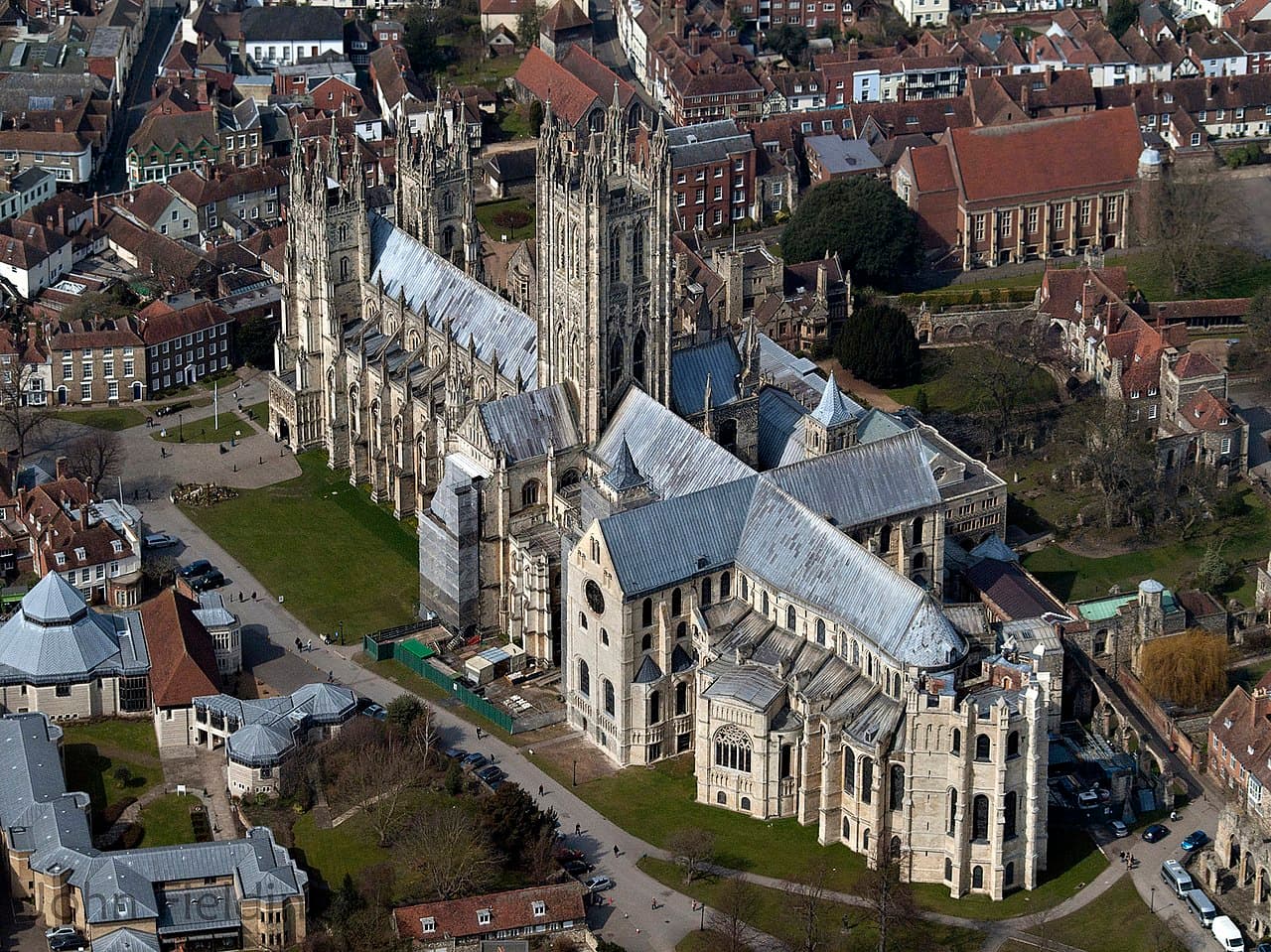
John Fielding, CC BY 2.0, via Wikimedia Commons
Canterbury Cathedral
Cathedral and Metropolitical Church of Christ at Canterbury
Also known as: Canterbury Cathedral, Christ Church Cathedral, Metropolitical Church
Religions: Christianity | Place Type: Cathedral | Region: Europe | UNESCO World Heritage Site
Overview
Canterbury Cathedral is a Church of England cathedral in Canterbury, Kent, England. As the cathedral of the Archbishop of Canterbury (spiritual leader of the Anglican Communion and Church of England), it is one of Christianity's most important churches. The cathedral, founded in 597 CE, is renowned as the site where Archbishop Thomas Becket was murdered in 1170, an event that transformed Canterbury into one of medieval Europe's greatest pilgrimage destinations, immortalized in Geoffrey Chaucer's 14th-century literary masterpiece, The Canterbury Tales.
Present
Canterbury Cathedral functions as the cathedral church of the Diocese of Canterbury and the Archbishop of Canterbury's seat. It hosts major Anglican events including the enthronement of new Archbishops of Canterbury and significant Church of England gatherings.
The cathedral welcomes approximately 1 million visitors annually, combining worshippers, pilgrims, and cultural tourists. The building balances religious function with heritage tourism. The cathedral operates as both active place of worship and visited historical monument. Admission fees for sightseeing support conservation (annual cost £4+ million), while worship services remain free to attend. Major restoration projects address medieval stonework deterioration from pollution and age.
The cathedral has endured threats: Luftwaffe bombing during World War II damaged parts of the cathedral library and destroyed buildings nearby, but the main cathedral survived. Conservation ensures survival for future generations. The Martyrdom site in the northwest transept marks Becket's murder location with a modern sculpture and flickering candles. The spot attracts pilgrims and visitors reflecting on Becket's sacrifice for church independence.
The Trinity Chapel, once housing the shrine, remains a place of prayer. Modern pilgrims, including Anglican clergy from worldwide communion, visit Canterbury as spiritual journey. The site also draws literary tourists inspired by Chaucer, historians interested in medieval England, and architecture enthusiasts admiring Gothic masonry.
Religious Significance
Anglican Christianity
Canterbury Cathedral serves as the mother church of the worldwide Anglican Communion, comprising 85 million Christians across 165 countries. The Archbishop of Canterbury, based here, is Anglicanism's symbolic leader, though individual Anglican churches (Episcopal Church in USA, Church of England, Anglican Church of Canada, etc.) maintain independence.
Canterbury Cathedrals status as the cradle of English Christianity began in 597 CE, when St. Augustine (later St. Augustine of Canterbury) arrived to convert Anglo-Saxon England under the patronage of King Æthelberht. Following the break from Rome in 1534 under King Henry VIII, the Church of England retained traditional elements such as Catholic-influenced liturgy, sacraments, and episcopal structure, while formally rejecting papal authority. This dual identity defines the cathedral's current role as both a historic foundation and the symbolic center of the worldwide Anglican faith.
The cathedral’s history is defined by the 1170 CE murder of Archbishop Thomas Becket, who was killed by four knights following a conflict with King Henry II over church authority. Becket was canonized in 1173, and his tomb became a major destination for pilgrims from across Europe. While King Henry VIII ordered the destruction of Becket’s gold-covered shrine in 1538 during the English Reformation, the site remains a focal point of the cathedral. In 1534, the Church of England moved away from papal authority to establish the Anglican tradition, which maintains a mix of traditional liturgy and independent governance.
The Trinity Chapel behind the high altar housed Becket's shrine, covered in gold and jewels donated by pilgrims including kings. King Henry VIII, dissolving monasteries and asserting royal authority over the English church, ordered Becket's shrine destroyed in 1538, scattering the bones and seizing the treasures. Today a single candle marks the shrine's former location.
History & Structure
Canterbury Cathedral serves as a primary Christian center, housing England’s largest crypt and the historic Trinity Chapel where the shrine of Thomas Becket once stood. The 160-meter-long interior includes a dedicated choir area for daily services and a vast nave designed to accommodate large congregations. The site features an extensive collection of medieval stained glass that narrates Biblical themes and the miracles associated with Becket, preserved through centuries including careful removal during World War II.
The cathedral grounds encompass the Great Cloister, the Chapter House, and the adjacent ruins of St. Augustine’s Abbey. These spaces reflect the site's transition from a monastic community to its current role as a World Heritage site and the symbolic center of the Anglican faith. The historical practice of traveling to this location was immortalized in Geoffrey Chaucer’s The Canterbury Tales, which documented the social and spiritual diversity of the pilgrims who have visited the cathedral since the middle ages.
UNESCO designated the site a World Heritage Site in 1988.
Practical Information
- Accessibility
- Ground floor mostly wheelchair accessible via ramps. Upper levels (triforium, towers) inaccessible (stairs only). Wheelchairs available for loan.
- Accommodation
- Canterbury has hotels (£70-150), B&Bs (£50-90), hostels (£20-40). Wide range of restaurants in historic center.
- Admission
- Standard visitor ticket £18 adults. Children FREE when accompanied by paying adult (max 2 children per adult; group bookings different rules). Ticket valid 12 months for unlimited return visits. Guided tours £5 per person (approximately 1 hour). Book tours on arrival; departures at regular intervals. Available in multiple languages (subject to availability).
- Best Time
- Weekday mornings less crowded. Avoid weekends in summer (very busy). September-October ideal for pleasant weather and manageable crowds.
- Canterbury Pilgrimage
- Modern pilgrims can walk historical routes to Canterbury. The Pilgrims' Way from Winchester (150 km) and London routes recreate medieval experience. **Events:** **Special Events:** Cathedral hosts concerts, lectures, and special services. Check events calendar on website.
- Dress Code
- Respectful clothing requested. Modest dress for services.
- Getting There
- From London: train from St Pancras or Victoria stations (1-1.5 hours, £20-40). Frequent trains daily. Canterbury has two stations: Canterbury East (closer to cathedral, 10-minute walk) and Canterbury West (15-minute walk). By car: M2/A2 from London (1.5 hours). Cathedral well-signposted from city approaches. Parking in city center pay-and-display lots.
- Guided Tours
- Regular free 15-minute mini-talks throughout day. Paid hour-long guided tours available (£5). Audio guides not currently offered.
- Hours
- Monday-Saturday 09:00-17:00 (last entry 16:00). Sunday 11:30-17:00 (last entry 16:00). Note: Between 11:30-12:30 Sundays, only cathedral grounds and shop accessible; cathedral church opens 12:30. Always free to attend services. Hours subject to change for services and events; check website.
- Location
- Canterbury Cathedral is in Canterbury city center, Kent, southeastern England, 90 km southeast of London. Address: 11 The Precincts, Canterbury CT1 2EH.
- Nearby
- St Martin's Church (England's oldest church in continuous use), St Augustine's Abbey ruins, River Stour boat tours, medieval city walls.
- Photography
- Permitted for personal use without flash or tripod. No photography during services. Commercial photography requires permission and fees.
- Services
- Free to attend. Morning Prayer: 07:30 weekdays. Eucharist: 08:00 and 12:30 weekdays. Choral Evensong: 17:30 weekdays (except Monday) and 15:15 Sundays. Sung Eucharist: 11:00 Sundays. Times vary; check website. Evensong particularly recommended for visitors.